In this edition of “What Matters in North Carolina,” Mark Shiver interviews an adviser to the Donald Trump campaign, Dr. Peter Navarro, about how trade deals have cost North Carolina thousands of jobs. Plus, Dr. Adam Hyde, from the University of Virginia, explains how free markets benefit society.
Economics
Trump Aide: How Trade Deals Hurt NC

NC Holds on to 11th Best Business Tax Climate

The Tax Foundation today released its annual Business Tax Climate Index for 2017. North Carolina was on the verge of cracking the top ten – remaining in the 11th spot. The new ranking marks the third straight year NC is ranked 11th best in the nation.
The lofty slot is a significant change from as recently as the 2014 ranking, in which NC was rated 41st (among the ten worst). That was before the state’s major tax reforms passed in 2013.
NC performed especially well in the corporate income tax and unemployment insurance tax categories, ranking 4th and 6th best, respectively.
The improved business climate in NC has contributed to positive economic news, but unfortunately far too few even know about NC’s tax cuts in recent years.
NC Median Household Income Growth Tops in US, Since 2013

A week ago, I wrote about some positive economic news pointing toward NC’s economy being on a “hot streak.”
Today, the U.S. Census Bureau released household income data that sheds even more positive light on NC’s economy. An analysis provided via email from Brent Lane, Director of the UNC Center for Competitive Economies at UNC-Chapel Hill, provides some highlights (this data uses inflation-adjusted figures):
- Over the past three years (which encompasses NC’s 10 quarters of superior per capita income growth) NC recorded the highest (#1) median household income growth in the US. NC’s median household income grew 18.42% since the beginning of 2013. The US figure grew 7.31% over the same period.
- In contrast, since reaching its highest comparative level in 1997, between 1997 and 2012 NC’s median household income growth rate of -18.74% was 49th in the US.
- In the past year US median household income grew 5.21%, while NC’s grew 8.45% (ranked 8th).
- In 2012 NC’s median household income ranked 46th in the US. In 2015 NC ranked 37th.
- NC median household income in 2015 is still $6k behind the US. But the gap is closing. In 2012 the gap was $10k.
Now we have significant positive data for both per capita income and median household income, with marked improvements beginning once the 2013 state tax reforms were implemented.
Income inequality: not what you think
We’ve long been conditioned to think that even if our choices, opportunities and talents differ, it’s somehow better if our incomes are the same. Why? Because income inequality is bad. That’s a bad idea and contradicts the freedoms on which America was founded says John Tamny in a compelling new video from Prager University.
[iframe id=”https://www.youtube.com/embed/1e35Vf-9n8E”]
NC Job Picture Continues to Improve

New figures show that North Carolina’s unemployment rate dropped below the national average for July. From a press release from Gov. McCrory’s office:
North Carolina’s unemployment rate decreased below the national average to 4.7 percent in July. Since Governor Pat McCrory entered office in 2013, the number of unemployed persons in North Carolina is 45 percent lower.
“As home to one of the fastest growing economies in the country, North Carolina’s unemployment rate has now dropped below the national average and more than 300,000 new jobs have been added since 2013,” said Governor McCrory. “We have successfully modernized the tax code, fixed the broken unemployment insurance system and implemented an economic development strategy that has strengthened the economy and put more people back to work.”The unemployment rate is now lower than it has been since May 2007 and the size of the labor force is 2.9 percent larger than in January 2013.
Interestingly, NC’s unemployment rate has been lower or tied with the national average 9 times since Feb. of 2014 (as calculated monthly). NC’s rate had been higher than the national average for 90 of the 92 months prior to that (the period May 2006 to Jan. 2014). These are clear signs of improvement.
Moreover, NC’s labor force has been growing at a faster pace than the national rate. Since Jan. 2013, NC’s labor force grew by 2.9 percent, while the national labor force grew by only 2.3 percent. This is another healthy sign, and puts to rest the critics’ claims that NC’s unemployment rate is only improving because the labor force is shrinking.
Soak the rich!

That’s the red meat line of many of America’s leftist politicians and opinion makers. Most recently it’s been a constant theme of Sen. Bernie Sanders and Hillary Clinton as they’ve competed for the Democratic nomination for President. Both seem to think that all our domestic problems derive from the rich not paying enough taxes.
It’s a good line for young crowds. However sooner or later the words collide with the truth.
A new report from the Congressional Budget office says the rich pay more than their fair share of taxes.
In 2013, households in the highest quintile received an estimated 52.6 percent of before-tax income and paid 69.0 percent of federal taxes; households in the top 1 percent received 15.0 percent of before tax income and paid 25.4 percent of federal taxes. In all other quintiles, the share of federal taxes was smaller than the share of before tax income: Households in the bottom quintile received 5.1 percent of income and paid 0.8 percent of taxes, and households in the middle quintile received 13.9 percent of income and paid 8.9 percent of taxes.
Commenting on the same topic on his blog Carpe Diem, AEI economist Mark Perry writes:
When the top 20% percent of US households are financing 96% of the transfer payments to the bottom 60% and financing almost the entire non-financed operating budget of the federal government, I’d say “the rich” are paying beyond their fair share of the total tax burden, and we might start asking if the bottom 60% of “net recipient” households are really paying their “fair share.” At the very least, we should be thanking the top 20% of Americans for shouldering such a disproportionate share of the federal tax burden, and not constantly vilifying them and proposing to increase their taxes in the interest of “fairness.”
Enough said?
Study Shows State Finances Improved
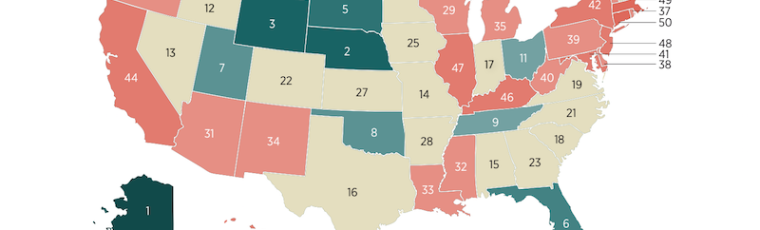
A new study from the Mercatus Center highlighted improvements in North Carolina’s fiscal performance from fiscal 2013 to 2014.
“Ranking the States by Fiscal Conditions, 2016 Edition” ranked the state’s fiscal performance for the 2014 fiscal year 21st in the nation. That was a jump of six places from its ranking of 27th in the 2013 fiscal year.
According to the center: “A new study for the Mercatus Center at George Mason University ranks each U.S. state’s financial health based on short- and long-term debt and other key fiscal obligations, such as unfunded pensions and healthcare benefits.”
According to Mercatus, the Old North State was a “big mover” in two key areas:
Two states—Maine and North Carolina—experienced a significant shift in their long-run solvency ranking. Maine fell by eight spots and North Carolina improved by seven spots.
There was little movement in the service-solvency ranking [how much “fiscal slack” a state has raise spending if needed], except in the case of North Carolina, which improved its position by six places.
Note that the improvements happened from the 2013 to 2014 fiscal years, after key conservative reforms were imposed by the legislature and governor on the state’s fiscal governance.
But don’t break out the champagne just yet. Mercatus notes that almost all the states, including NC, still face severe fiscal stress. A lot more needs to be done in North Carolina. But the new study shows North Carolina has been making important strides forward.
To find out more about the study, click here.
To learn more about the long-term story of the state’s budget, check out our new policy guide.
NC Energy Crook Nearly Laughed Out of Commissioner’s Meeting
Currituck County commissioners this week denied a permit for a third solar farm for the county. Most notable from the article is how the snake oil salesman “project development manager” for the crony solar company was nearly laughed out of the commissioner’s meeting.
Opponents of the project, which would have been the county’s third solar farm, nearly filled the commissioner’s meeting room Monday night.
At one point, they had to be gently chided by Chairman David Griggs for chuckling during a presentation by Nathan Rogers, project development manager for the solar energy company.
As part of a Powerpoint presentation detailing the economic benefits to the county, Rogers mentioned $300,000 spent locally in equipment rentals. Commissioner Paul Beaumont put Rogers on the spot by asking him which local equipment companies were in Currituck County, to the bemusement of the audience, as there are none.
Rogers then went a little further, mentioning $400,000 in local room and board, food, water and beer, which locals found even more amusing, considering lower Currituck’s lack of hotels.
Cronyism, government privilege, distortion of facts and outright lies are the stock and trade of the “greed energy” industry.
To learn more about how renewable energy scam artists are ripping off North Carolina ratepayers and taxpayers, visit www.ncenergycrooks.com.
NC Ranked No. 2 for Economic Outlook
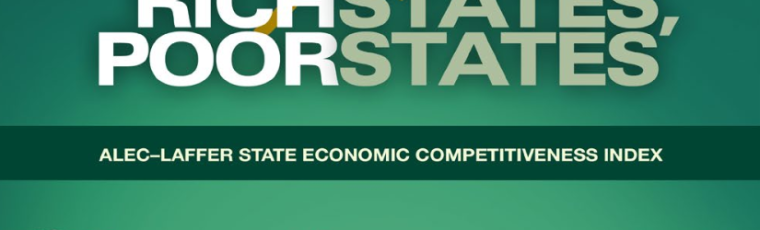
North Carolina’s economic outlook ranked second in the United States in a new analysis of all the states’ economic competitiveness from the American Legislative Exchange Council (ALEC).
The 9th Edition of Rich States, Poor States: ALEC-Laffer State Economic Competitiveness Index uses data to rank the 2016 economic outlook of states using fifteen equally weighted policy variables, including various tax rates, regulatory burdens and labor policies.
The economic outlook, the report said is “a forward-looking forecast based on the state’s standing (equal-weighted average) in … 15 important state policy variables,” including being a right-to-work state, tax rates, the tax burdens, and other factors that influence a state’s prosperity.
Not only did our state rank second for its economic outlook, it has shown rapid improvement. Through 2013, North Carolina ranked in the mid-twenties. That jumped to sixth in 2014, fourth in 2015, and now second.
What happened after 2013? North Carolina began to reap the benefits of throwing off a century of rule by one party, as Republican Pat McCrory and GOP majorities in both chambers of the legislature began passing key fiscal reforms. Those reforms are paying off for North Carolina and helping to create a more competitive economic climate.
To learn more about the state’s fiscal history leading up to that point, turn to our budget policy guide “Unlocking the State Budget: 1985-2012” by clicking here.
Rich States, Poor States: ALEC-Laffer State Economic Competitiveness Index is authored by economist Dr. Arthur B. Laffer; Stephen Moore, distinguished visiting fellow at the Heritage Foundation; and Jonathan Williams, vice president of the ALEC Center for State Fiscal Reform.
Click here to read the ALEC report.
PayPal: King of Hypocrisy
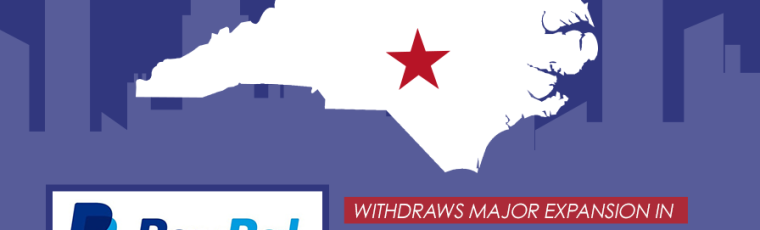
Katrina Trinko’s 8 Questions for PayPal post on the Daily Signal is well worth the read.
Trinko’s article points out the problems and flawed logic that follow PayPal’s decision to not expand in North Carolina because of the company’s opposition to HB 2.
For those of you who haven’t read PayPal’s statement, find it here. Part of it reads:
This decision reflects PayPal’s deepest values and our strong belief that every person has the right to be treated equally, and with dignity and respect. These principles of fairness, inclusion and equality are at the heart of everything we seek to achieve and stand for as a company. And they compel us to take action to oppose discrimination.
Highminded language. I wonder, are those deep values and strong beliefs — that every person has the right to be treated equally and with dignity and respect — also at the root of the company’s decision to expand into Cuba, a country with one of the worst human rights records in history?
Are those deep values and strong beliefs — that every person has the right to be treated equally and with dignity and respect — also what influenced PayPal’s decision to make Singapore the company’s International headquarters?
In case you didn’t know, Singapore prohibits relations between same-sex adult men and does not recognize relationships of same sex couples in any form. The country also prohibits same sex couples from adopting or from even participating in any childrearing arrangements.
Does Singapore protect LGBT persons from discrimination? Not according to Wikipedia
No laws exist specifically protecting LGBT Singaporeans from discrimination in the workplace, housing or any other relevant areas. Previous attempts claim damages for alleged discriminatory conduct in such fields have been dismissed in Singaporean courts.[10]
I guess PayPal is only concerned about those deep values and strong beliefs in certain parts of the world.
Don’t believe me? Do your own search or read about Singapore and its LGBT policies here.
Dan Schulman, your PayPal statement rings hallow and rings with hypocrisy.