This is an archive of the Civitas Institute website, preserved by the John Locke Foundation. It is no longer updated.
For current research and polling, visit johnlocke.org.
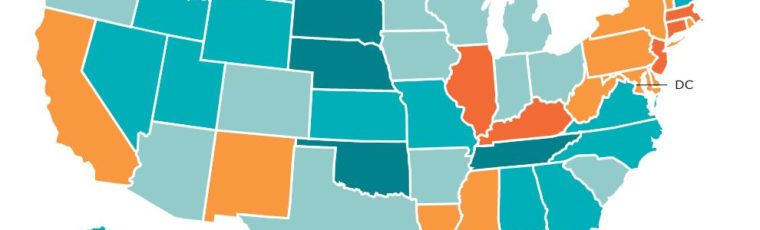
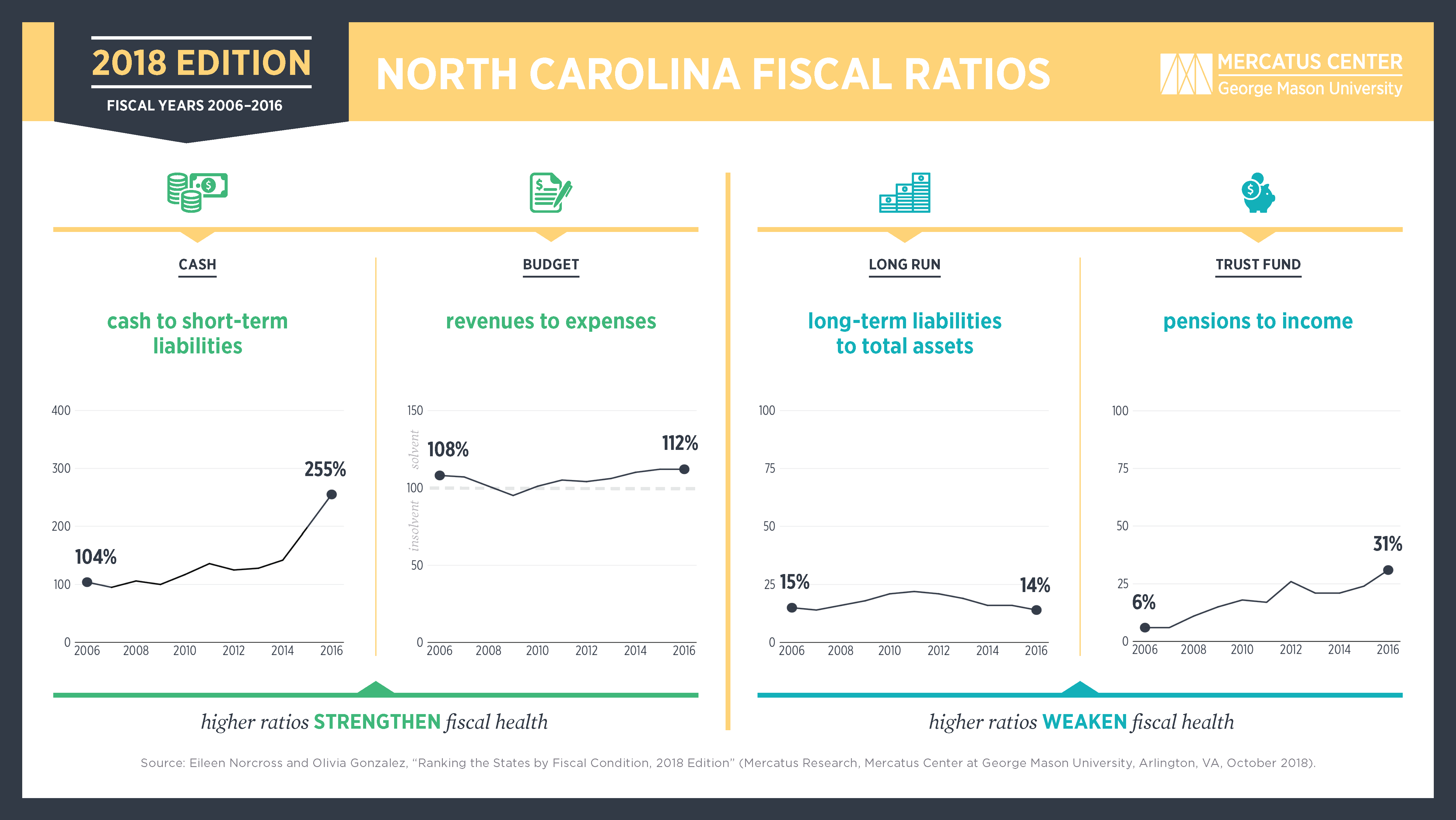
Even though it was formally announced last week, some news bears repeating; North Carolina is ranked 9th among the states for fiscal health. That’s the finding of the Mercatus Center of George Mason University which conducts the annual study. Rankings are a product of the health and solvency of state finances in five key dimensions: cash, budget, long-run, service-level and trust fund.
Among states in the southeast, only Tennessee (#3) and Florida (#4) have a higher ranking than North Carolina.
North Carolina’s ranking represents an improvement of six spots over last year’s ranking of fifteen.
As recently as 2014, North Carolina was ranked 38th among the states for fiscal health. However, in the four years since then, the Tar Heel state has improved its ranking each year; climbing 29 places in four years.
That’s impressive. Thanks go to our legislators and policymakers and their dedication to fiscal discipline.
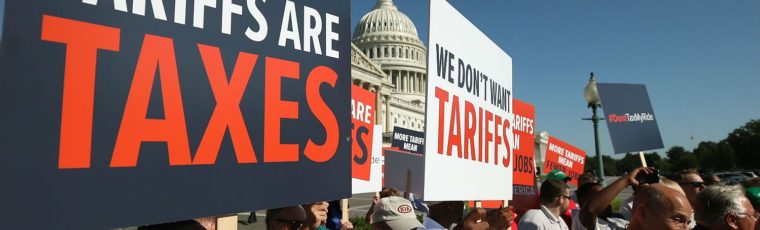
When the federal government imposed its tariffs on foreign steel and aluminum, it created a provision whereby firms could request an exemption to the Department of Commerce.
At the time this exemption was announced, the Commerce Department estimated they would receive about 4,500 exclusion requests from the steel tariff and 1,500 from the aluminum tariffs.
As of Sep. 10, U.S. manufacturers from across the country have filed 28,769 exclusion requests for steel and 3,674 for aluminum….
Ask any U.S. manufacturer, and they’ll tell you they need access to competitively priced raw materials to stay viable in the U.S. market and their export markets.
Some U.S. manufacturers need specialty steel, and the only place they may be able to get that from is abroad. It should come as no surprise that U.S. firms have filed thousands of requests to be excluded from these tariffs.
According to this interactive data compiled by TradeVistas, North Carolina companies have filed roughly 200 exemption requests. These companies rightly view the tariffs as a threat to their bottom line and their ability to sustain jobs.
A few jobs in the steel and aluminum manufacturing industries may indeed be protected by such tariffs, but negative effects far outweigh any gains.
There are 6.5 million American workers in steel-consuming sectors, about 40 times the number working in the steel industry. Increasing the price of something that so many manufacturers need is obviously going to cause grief….We have been here before. The number of jobs lost to the March 2002 steel tariffs exceeded the entire number of people in the steel sector. As documented by the Trade Partnership, “[M]ore American workers lost their jobs to higher steel prices than the total number employed by the U.S. steel industry itself (187,500 Americans were employed by U.S. steel producers in December 2002).” (emphasis added)
In 1788 Thomas Jefferson wrote that “The natural progress of things is for liberty to yield, and government to gain ground.” It’s a dilemma that has plagued governments long before our own. The concentration of power inevitably leads to corruption and tyranny. Just a quick glance at our federal debt clock exposes the catastrophic mess that has been made out of our national government.
But if there is one advantage of a broken federal government it can highlight the fact that reform is taking place at the state level. We’ve seen some of that in North Carolina and other states. Of course, welfare reform and scores of other innovative reforms were championed by states. While the federal government is boxed in by a mammoth bureaucracy and crippling debt, the onus is on the states and its citizenry to expand freedom.
Here are a few things we can do (and continue to do) in North Carolina to expand freedom now:
1) Lower the tax cap:
Voters have an opportunity in November to approve a state constitutional amendment to cap the income tax at 7 percent. This is lower than the current 10 percent cap. Unfortunately, state lawmakers did not approve the originally proposed cap of 5.5 that passed the state Senate. Still, 7 percent is better than 10. While lowering the cap doesn’t reduce any taxes now it obviously shields citizens from higher rates like the 8 percent that some experienced during the tenures of governors Mike Easley and Bev Perdue.
North Carolinians should continue to demand low taxes. Lower taxes not only stimulate economic growth and prosperity but its the morally right thing to do to allow people the fruits of their labor. North Carolinians should never tire in petitioning their representatives for lower taxes.
2)Reform Occupational Licensure Laws:
North Carolina licenses almost 200 occupations. A locksmith is just one profession. But when qualified applicants are discouraged from practicing their skills because of arcane barriers, it diminishes human flourishing. Not only when it comes to vocational fulfillment but the satisfaction of providing for one’s family or loved ones. The cash needed to purchase licensing certificates are often unavailable to those out of work even though they may have the necessary skills to perform the job. Consumers are hit hard too through higher prices because of lower competition and the cost disproportionally falls on those in lower income brackets.
Thus, the growth of occupational licensing tends to look more like cronyism instead of promoting public safety.
The Goldwater Institute in Arizona has wisely suggested states enact a “Right to Earn a Living Act,” which puts the onus on government to show how licensing protects the public health and the common good, thereby diminishing unnecessary barriers to employment. There is virtually no reason to continue to retain occupational licensing for most professions and scrapping many of them will only improve the overall economic vitality in the state. North Carolina could easily promote human flourishing by enacting the “Right to Earn a Living Act.” More opportunities for vocational fulfillment and higher income would be immediately within reach for so many North Carolinians.
3) Civic education:
Okay, while this proposal may not show immediate dividends, it’s too important not to make the list. Most of us are in need of more civic education. Freedom, the rule of law, and natural rights don’t just exist in a vacuum. A Republic requires responsible and virtuous citizens not just the right policy prescriptions. We can’t merely continue on so divided politically and not face serious fragmentation as a nation.
Earlier this week, the Duke Chronicle published a piece warning about the “dangers” of the school’s acceptance of funding from the Charles Koch Foundation for a “Center for History of Political Economy.”
Written by a PhD candidate at Duke, this article irresponsibly makes claims about the works of Friedrich Hayek and the Austrian School of economic theory somehow “fueling the violent Alt-Right.”
Naturally, there is zero evidence provided, and the absurd accusation itself reveals this PhD student to be completely ignorant of the subject matter.
Duke alum, and occasional Civitas contributor Tyler Bonin, responded in the Chronicle here. A few highlights from Bonin’s response:
It (the original article) furthermore paints a caricature of Nobel Prize winner Friedrich Hayek that is inconsistent with his most famous writings. I expect more from the history department at Duke….
Populist movements which seek to make swift change by building up and utilizing the most extreme of coercive governmental powers leads to a violent expansion of government that curtails individual liberty and the free market principles that Hayek posited. The violence associated with the alt-right is thus incompatible with the points put forward by Hayek and other economists from the Austrian School.
Perhaps what is most appalling about this is the fact that the Chronicle editors decided to run the original piece, full of sloppy innuendo and wild and unsubstantiated claims, in the first place.
In the most recent quarterly Gallup Polling Small Business Index survey results, optimism among small business owners was at an all-time high. Although it is a national poll, North Carolina can learn some lessons from the results.
Hiring was the top concern
The most common concern for small business owners was hiring and retaining qualified workers. For North Carolina, this concern is likely to be fueled by the middle-skill job gap. The National Skills Coalition defines middle-skills jobs as those that require more than a high school diploma but less than a 4-year degree. In 2015, 55 percent of North Carolina’s jobs were middle-skill level, but only 44 percent of the state’s labor force have that level of training.
North State Journal Editor Donna King provided important context and policy implications of the issue in an April 2018 article. King wrote:
After the federal GI Bill was enacted in 1944, a belief emerged that the American dream included attending a four-year college. Generations of parents encouraged their children to join the white-collar workforce with a bachelor’s degree.
Community colleges became a second choice. But today, as the technical skills gap become more apparent and a four-year degree more costly, policymakers are focusing on the now-growing role of the state Community College System.”
This underscores the importance of North Carolina continuing to cultivate a trained workforce. As King mentioned, community colleges are an ideal place for this type of education. Career-focused or dual-enrollment trainings for high school students are another option.
The disconnect between the skills needed by employers and the skills being acquired by students and the workforce is exacerbated by massive government intervention in higher education, such as subsidies and government student loans. Rolling back such interventions would allow clearer signals and incentives for students to enroll in programs most valued by employers.
The state’s ability to foster small business development and growth may depend on its supply of appropriately-trained workers.
Fiscal and regulatory policies also matter
Behind hiring, taxes were the next most-cited concern by small business owners.
Most small businesses are taxed as “pass-through businesses,” meaning that the owners claim the business income on their personal income taxes. This means that most small business income in North Carolina is taxed at the income tax rate of 5.49 percent.
Compared to other states that levy income taxes, North Carolina’s income tax rate is at the middle of the pack. However, seven states have no income tax and two others only tax dividends and interest, according to the Tax Foundation. This puts North Carolina at a competitive disadvantage when trying to attract businesses. However, the state has made progress in the right direction; in 2006, the top personal income tax rate was 8.25 percent. If North Carolina passes the proposed constitutional amendment to lower the income tax cap to 7 percent, current and potential small business owners in the state will have the security that the rate will not get to the 2006 level again.
When the business owners’ concerns were grouped into categories, almost a quarter (24 percent) of small business owners say that government policies are the biggest concern for their business. This category included the concerns of taxes, regulations, trade wars or tariffs, and government in general.
These results remind us that businesses are not impartial machines. It can be tempting to think of “the market” or “the economy” as an inanimate object within public policy discussions. But it is important to keep in mind that the market is simply a collection of individual citizens – business owners, consumers, investors – who make decisions based on the information available to them. If state policymakers want to encourage the growth of small businesses, they should demonstrate the state’s commitment to deregulation, low taxes, and the free market.
Small business owners are keystone economic actors because their entrepreneurship creates jobs for others, perpetuating a cycle of economic growth. North Carolina should continue to send those individuals the signal that the state is committed to cultivating a qualified workforce and scaling back government intervention in the free market.
In North Carolina, charging high prices for goods and services during disasters can be illegal, in violation of the state’s anti-price-gouging laws. And on Friday, when Gov. Roy Cooper declared a state of emergency due to Hurricane Florence, that put the state’s anti-price gouging laws into effect.
Gas stations have been doing brisker-than-usual business this week, as people fill up before Florence arrives Thursday. Some stations have even run out of gas…..At the Valero station at Ten Ten and Holly Springs roads, the bottled water was gone Tuesday afternoon.
I evacuated just a few days before Hurricane Katrina made landfall on the Mississippi Gulf Coast in 2005. I wanted to stay because the experts said it was moving west of New Orleans, but it hit Mississippi like a freight train. My dad, who was out of state at the time, was wise to order me out of his house. I was in graduate school in Kentucky so I had a place to go, but I’ll never forget going back.
If you’ve ever seen pictures of Hiroshima and Nagasaki after the dropping of the atomic bombs in 1945, it had that feel. A lot of concrete slabs. No trees. Boats from the harbors washed far inland, a few boats somehow suspended in the trees that remained. It was brutal and there was a significant malaise and fatigue from folks trying to put their life back together. Where do you start when all your possessions are gone?
I was amazed at the quickness Southern Baptist Disaster Relief cut through the rubble to meet immediate needs,” said one Katrina survivor. The Southern Baptists’ North American Mission Board raised a total of $25 million to assist Hurricane Katrina victims. An American Red Cross representative in Alabama said, “I don’t believe the Red Cross could do what it does in terms of feeding people without the Southern Baptists.” She described the Southern Baptist food delivery system as a “well oiled machine.
All that to say, hopefully, there are no similarities between Hurricane Florence and Katrina. We all desire the very best outcome for this region.
Donald Bryson highlighted the importance of charitable giving in an earlier post. If you can give to one of those organizations, do it because of the way that they powerfully transform lives. Having a little involvement in the recovery efforts in Katrina, one of the ways churches are so effective at meeting needs is because they are not hemmed in by a massive bureaucracy and regulatory state. They don’t have to means test you to help. There is usually no mountain of paperwork to fill out to receive assistance. Church charities learned a lot of lessons from Katrina and if anybody has ever seen the efficiency of the Southern Baptist Disaster Relief in a crisis they would know that kind of service is hard to replicate either by for-profit organizations or government.
While emergency church disaster organizations are often the first on site, big box companies with massive resources are right behind them. NPR noted how much quicker they provided help over the government in the wake of Katrina. And locally, WRAL posted a video about the efforts being made by Food Lion to meet the needs of those preparing for this impending hurricane. This is no doubt being replicated by many of the big stores across parts of North Carolina.
Again, give if you can and be thankful for not just the many first responders risking their lives, but also the charitable groups and businesses that are truly equipped to assist people by meeting their needs in a crisis. I’ll always remember the armies of church groups who poured into the Gulf Coast after Katrina. Not only because they were first, but also because they were there helping long after the government.
The Tax Foundation yesterday posted data on state corporate income taxes paid per capita. North Carolina finished 31st highest, with $105 in corporate tax collections per capita.
Unsurprisingly, collections were highest in New Hampshire at $525 per capita and Massachusetts at $342 per capita. Data is taken from fiscal year 2016.
In that year, North Carolina collected about $1 billion in corporate income taxes, down from $1.3 billion the previous year. In 2016, the corporate income tax rate rate dropped to 4%, down from 5% the year before, 6% in 2014, and 6.9% in 2013. These changes came courtesy of the 2013 tax reform.
Today, the corporate tax rate is 3%, and set to fall to 2.5% in 2019.
For fiscal year 2017-18, corporate tax collections dropped to $739 million – only about 3% of total state tax revenue.
Perhaps its time to consider eliminating such a small source of state revenue. No doubt the amount of compliance costs on businesses is high relative to the small amount of revenue raised. Moreover, the Tax Foundation discusses other reasons why the corporate tax is so damaging:
Revenue volatility is another reason states have reduced their reliance on corporate income taxes. Corporate income can vary drastically from one year to the next due to business cycle fluctuations, leading to unstable revenue collections. Finally, corporate income taxes have been shown to be more detrimental to economic growth than other major state tax types, including personal income taxes, consumption taxes, and property taxes, and they are administratively complex for both taxpayers and states.
A highly volatile, job-killing, administratively difficult tax that generates a small fraction of state income – that’s the corporate income tax.
Perhaps its time to consider cutting the rate all the way to zero.
A recent Winston-Salem Journal editorial praised legislators for raising the lowest rung of the pay scale for state government employees to $15 an hour, but more thoroughly chastised them for not raising the state’s minimum wage for all workers.
Adjusting the pay scale for government employees to a livable wage is an appropriate and noble act. But why have legislators consistently opposed this for the workforce in general? What’s good for the goose isn’t good for the gander?
But the Leftists in the mainstream media still don’t get it. They exhibit either willful economic ignorance or yet another instance of cognitive dissonance in denying the harmful effects of the minimum wage. For a quick refresher, following is a rundown of some of the main reasons why minimum wage laws should be abolished:
Minimum wage laws criminalize voluntary labor agreements. In a free society, employers and employees would be free to negotiate the terms of employment. Minimum wage laws threaten punishment to any such agreements in which the agreed upon wage falls below their arbitrary number.
Minimum wages price low-skilled labor out of jobs. Its basic supply and demand. At a higher price (wage), buyers of labor will demand less, and there will be more people willing to supply and “sell” their labor. Workers who don’t possess the skills to produce, say $15/hr value to the company will be laid off or otherwise never hired. There will be a greater tendency to replace low-skilled workers with automation. Moreover, a higher mandated minimum wage attracts more qualified candidates to apply for low-skilled work, crowding out the lower-skilled candidates.
Those that do retain their jobs after a minimum wage increase may not benefit on net anyway. They may see their hours cut, or non-wage benefits like health insurance, vacation time, training or working conditions reduced in order to offset the increased wage.
Minimum wage laws make it easier for employers to discriminate. At higher minimum wages, there will be a higher number of people willing to supply their labor. This excess supply of willing workers makes it far easier for those employers that want to discriminate on non-work related characteristics like race, gender, nationality, etc.
The minimum wage has racist origins. In the early 1900s, progressives who supported the minimum wage did so because it excluded so-called “undesirables” from the labor force. They knew minimum wage laws priced low-skilled labor out of jobs. They viewed this as a feature of the minimum wage, not a flaw. “Undesirables” at that time included blacks, Chinese and more recent immigrants from southern and eastern Europe, among others.