NC Capitol Connection has an analysis of Donald Trump’s inaugural address, plus audio of the speech. Click here to read about and hear the speech.
(The image shows the C-SPAN coverage of the inauguration.)
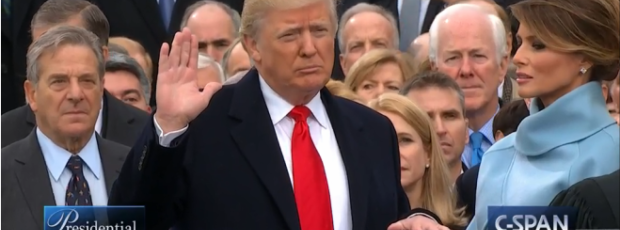
NC Capitol Connection has an analysis of Donald Trump’s inaugural address, plus audio of the speech. Click here to read about and hear the speech.
(The image shows the C-SPAN coverage of the inauguration.)
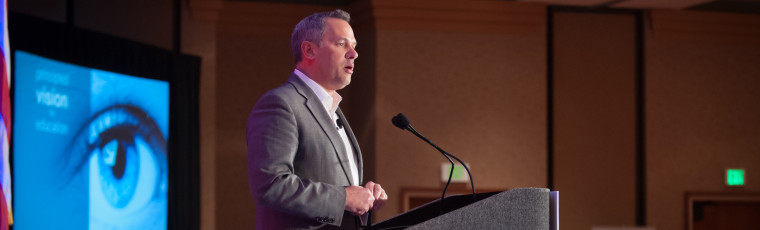
The latest “What Matters in North Carolina” podcast has a fascinating interview with Lt. Gov. Dan Forest. He reveals:
That and more can be heard by clicking here.

Has Roy Cooper nominated a telephone scammer? Governor Roy Cooper’s nomination of Michael Regan to be the Secretary of the Department of Environmental Quality is troubling in light of information obtained from the NC Secretary of States Office (NCSOS).
Regan was with the Environmental Defense Fund (EDF) from 2008-2016. During that time EDF was actively soliciting money by phone from North Carolina taxpayers.
During his time there, EDF reported taking in over $4.6 million from Tar Heels – yet only used about $1.3 million for charitable purposes according to published records at the NCSOS website.
While many people register with the Do Not Call list to avoid annoying phone calls – charities are exempt from the national and state laws prohibiting unsolicited calls.
While Regan was employed in a leadership position at EDF, the organization used the law to raise millions of dollars from good people concerned about the environment, but used less than 1 out of 3 dollars (under 29%) to actually support environmental work.
What makes this ironic is Roy Cooper has loudly proclaimed himself the defender of the consumer. In 2011 he actually hired Ken Eudy (now his senior adviser) to do a presentation to the NC Department of Justice on “financial scams.” I guess that presentation didn’t include how to keep radical environmental groups from fleecing our citizens…
Cooper needs to do a better job vetting his nominees and stop nominating controversial, radical environmentalists – who also look like they are fleecing our citizens!
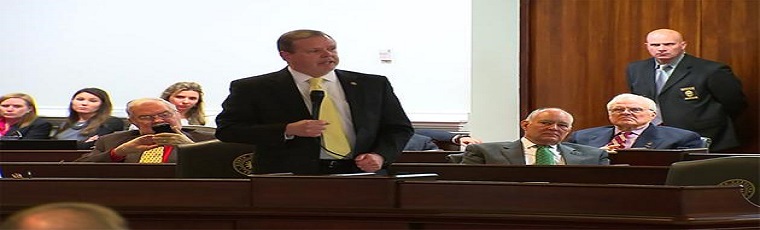
NC Capitol Connection provides an overview of yesterday’s contentious special session called to repeal HB 2.
Most of the day was spent in caucus discussing the measure to repeal HB 2 with the vote coming in the evening before the Senate adjourned around 7:30 p.m.
Before the vote Berger said he was offering Democrats a chance to prove that they sought a repeal of HB 2 by splitting the controversial cooling-off period in the bill from the rest of the bill, meaning that had that proposition been approved HB 2 would be repealed, but that vote failed 32-16 with all Senate Democrats voting against it.
Berger said, “What you’ve had before you today is not some gimmick to create the best of both worlds. It is a good faith effort, given the passion and disagreement surrounding this issue, and it is a reasonable solution that puts HB 2 behind us while providing some time to work out some of these broader tensions.”
Read the whole summary here. The legislature is likely to pick up the issue once again in January as the 2017 session begins.

As you might recall, HB2, which many in the mainstream media love to call the “bathroom bill,” was not the original “bathroom bill.”
The Charlotte City Council first poked their noses into the bathrooms of private businesses by passing an ordinance in February 2016 that required all businesses to make their places of public accommodation open to any and all genders.
The NCGA responded by passing HB2 in order to protect the rights of business owners and reaffirm the safety and privacy of women and children in places of public accommodation.
Cue the liberal media backlash and public shaming of the state of North Carolina, which has become a haven for businesses to thrive. All of a sudden, other states were sending travel advisories, urging folks to stay out of our “hateful” and “bigoted” state. Of course, this had nothing to do with the fact that in recent years since conservatives have run the state of North Carolina, it has become the #2 state for businesses and a top state for families as well. The fact is, as a direct result of strong leadership and a growing economy, Americans are migrating to North Carolina in droves. All of this despite the millions of dollars being funneled to liberal activists in our state to infiltrate it with their liberal agenda.
Eventually, the Republicans in the NCGA chose to extend an olive branch to Democrats in the General Assembly by offering a compromise. Democrats in the General Assembly had no interest in a deal and it was swiftly rejected.
And now, today, the same city council has found it politically expedient to offer the same compromise they recently rejected. Charlotte has approved a repeal of their original ordinance on the condition that the General Assembly repeal HB2. The only difference is that this time, the compromise offered would require a special session of the General Assembly, when they could have accomplished this back in September in the regular session.
Before HB2 was ever even passed, the General Assembly repeatedly urged the Charlotte City Council to repeal their ordinance. And after HB2 became law and backlash erupted, the NCGA and Governor McCrory offered to repeal HB2 if Charlotte would just repeal their dangerous ordinance.
So it seems the General Assembly will meet tomorrow and mark my words, if HB2 is repealed in order to make this deal, the media will hail the Charlotte City Council for their compromise as if they were the first to propose it. And despite his efforts to actively drive businesses out of NC, Governor-elect Roy Cooper is inserting himself into this deal to look like a hero. What a joke.
Yesterday’s “What Matters in North Carolina” podcast has revealing insights on the effect of the ballot results in state and national elections.
Host Mark Shiver interviewed North Carolina Speaker of the House Rep. Tim Moore (R-Cleveland) about how the presidential race played out in NC, and how the legislative results will play out when the General Assembly returns in January.
There was one subject he touched on very gingerly: The slim possibility that the legislature might have to step in if the dispute over vote tallies can’t be resolved in any other way.
Also, Civitas’ Susan Myrick provides an in-depth look at the election process. Finally, Wake Forest U. professor John Dinan gives listeners further analysis of the elections.

Regardless of how you feel about last night’s election results, Jeffrey Tucker of the Foundation for Economic Education reminds us of the big picture when it comes to politics. What is important to remember, Tucker notes, is the contrast between the harmony created by voluntary social interactions versus the conflict created when government gets involved.
If you go to the mall, the local bar, a bustling restaurant, a neighborhood cookout, a house of worship, a movie theater, a concert, or even a sports event, you will see signs of blessed harmony. Here, for the most part, people get along. No one is gouging each other’s eyes out or calling people enemies of the nation or race. Strangers find ways to cooperate. You are served in a friendly way by people you don’t know, even people from all over the world. The food you eat, the drinks you drink, the clothes you wear are all produced for you by people you have never met. They are strangers, yet they work for you and you work for them….
Perhaps politics is not revealing but actually exacerbating or even creating chasms. You create a huge state and invite people to struggle for control over it. You extract trillions in revenue and have a contest for who gets the cash and on what terms. You create a gigantic regulatory machine that micromanages lives and suggest some use it against others, depending on their preferences. You create a war machine and look around for ways to use it. That seems like a great plan to divide society.
Civility and harmony reign where individuals interact voluntarily, for instance in a truly free market. However, as Tucker notes: “The larger the state grows, the more it invades the peaceful areas of our lives. It creates division where none should exist and then proposes more of itself in order to fix the problems it creates.”
Tucker ends his article by issuing a challenge to readers:
So in our times, you live in two worlds, one of conflict and one of harmony. Which do you believe in? Which do you long for?
Do you embrace and celebrate the harmony of interests that is in evidence in our everyday lives? Or do you long for the conflict we’ve seen on display in the great political struggles of our times?
The choice you make not only identifies your ideological loyalties; it contributes to the kind of society in which we will live in the future.
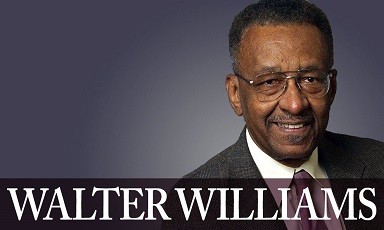
Economist and columnist Walter Williams has a new article discussing the concept of power, via a comparison between “the rich” and government.
Microsoft co-founder Bill Gates, having a net worth of $81.8 billion, and Amazon.com CEO Jeff Bezos, having a net worth of $70.4 billion, are the nation’s two richest men…With all the money that Gates, Bezos and other superrich people have, what can they force you or me to do? Can they condemn our houses to create space so that another individual can build an auto dealership or a casino parking lot? Can they force us to pay money into the government-run — and doomed — Obamacare program? Can they force us to bus our children to schools out of our neighborhood in the name of diversity? Can they force us to buy our sugar from a high-cost domestic producer rather than from a low-cost Caribbean producer? The answer to all of these questions is a big fat no.
…
Unless our elected public officials grant them the power to rip us off, rich people have little power to force us to do anything. A lowly municipal clerk earning $50,000 a year has far more life-and-death power over us. It is that type of person to whom we must turn for permission to build a house, ply a trade, open a restaurant and do myriad other activities. It’s government people, not rich people, who have the power to coerce us and rip us off. They have the power to make our lives miserable if we disobey. This coercive power goes a long way toward explaining legalized political corruption.
Without the coercion of a powerful government, the rich can only be successful by creating value for others (customers). Williams strongly makes this case, then makes an honest assessment that it is we, the people, who have played an integral role in granting the government its ever-expanding power over our everyday lives.
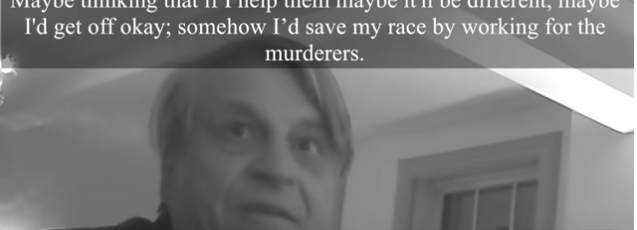
Today’s “What Matters in North Carolina” program focuses on one of the most explosive revelations of a tumultuous elections season. Host Mark Shiver opens the show with James O’Keefe, founder of Project Veritas Action, about his latest video release, which shows a top Democrat donor disparaging African-Americans who vote for Republicans. At a New York fundraiser for North Carolina U.S. Senate candidate Deborah Ross, prominent Ross donor Benjamin Barber expressed his opinion about blacks who vote Republican by comparing them to Jews who worked for the Nazis in concentration camps.
The show can be heard by clicking here.
After the explosive interview, Mark speaks with Dr. Susan Roberts, professor of political science at Davidson College, about the latest on how the various elections are playing out in North Carolina. He finishes by talking to Donald Bryson, state director of the North Carolina chapter of Americans for Prosperity, on that organization’s work across the state.
Police-involved shootings have grabbed headlines this year. That’s led to a call for more officers to wear body cameras.
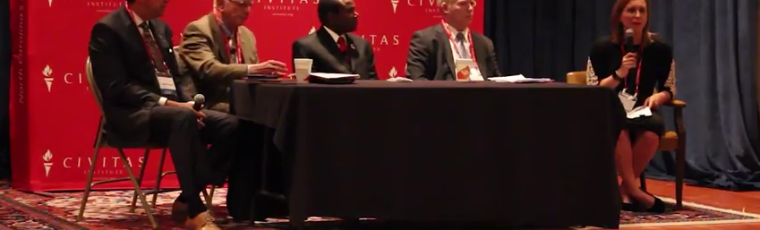
But a recent panel discussion, “Watching the Watchmen,” sponsored by the Civitas Institute and the Charles Koch Institute, revealed that such policies pose challenging questions. Here is a crucial segment of the wide-ranging conversation:
[iframe id=”https://www.youtube.com/embed/f8lJr8X0aNM” parameters=”https://www.youtube.com/edit?o=U&video_id=f8lJr8X0aNM”]
The event at the Greensboro Historical Museum featured four leaders who have thought long and hard about this subject:
The moderator was Angela Hight of Civitas Institute.
Among the issues the discussion surveyed were: how to balance privacy with the public’s interest in police incidents, managing expectations about such videos, protecting the integrity of investigations, and the limitations of today’s technology.
A key segment of the wide-ranging discussion can be viewed above.